

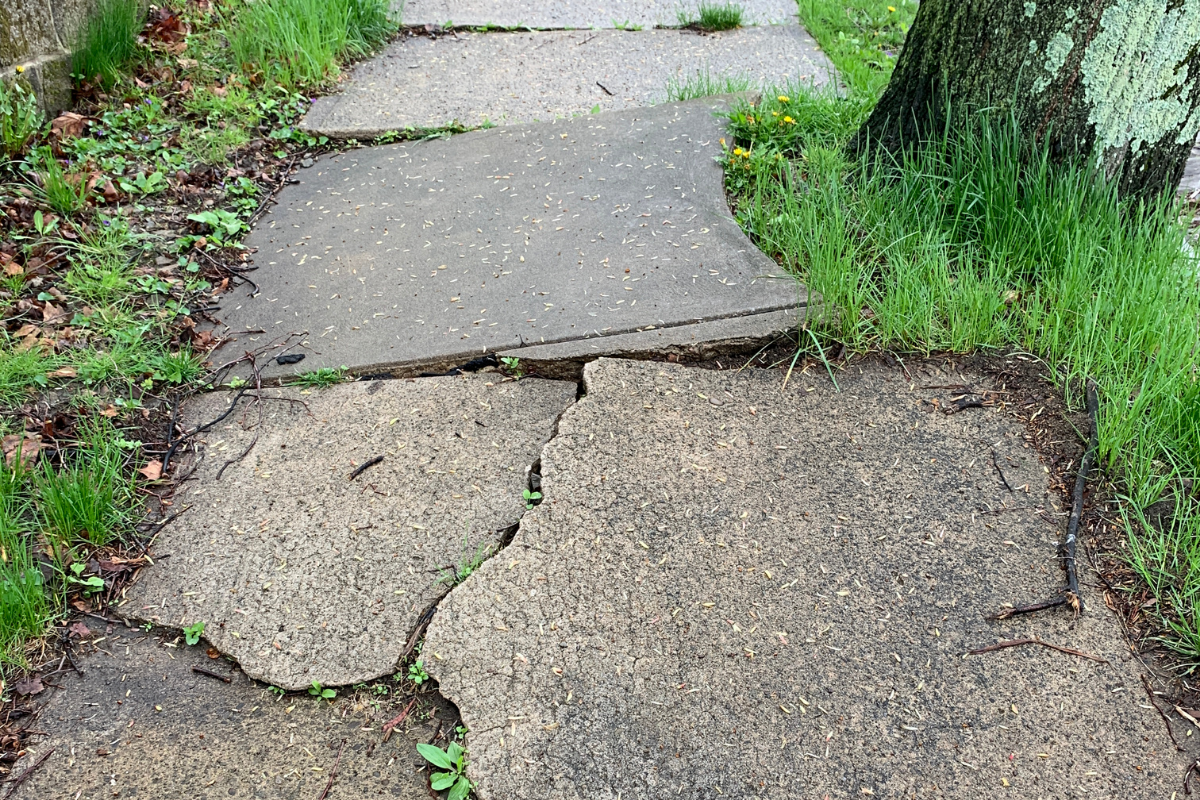

Deferred maintenance can feel like a practical short-term solution. When budgets are tight and owners are sensitive to assessment increases, postponing a repair or delaying a replacement may appear to buy time and preserve cash. In the moment, it can feel like responsible financial restraint. After all, if a roof is not actively leaking or the pavement is still usable, why not wait another year? But it’s important to remember that no money is ever “saved”. The expense is just pushed off to the future. The project still needs to be accomplished.
This reasoning is understandable. Board members are volunteers who must balance financial prudence with homeowner expectations. No one wants to impose unnecessary financial strain on their homeowners. Yet while deferring maintenance may provide temporary relief, it rarely produces long-term savings.
In reality, deferred maintenance often increases costs, risk, and creates unnecessary disruption for owners and board members alike. What begins as a modest delay often grows into a far more expensive and complex challenge. The longer the project is postponed, the fewer options remain.
Understanding the true cost of deferred maintenance — and how proactive reserve planning prevents it — is essential for associations that want long-term stability rather than recurring crises.
Core Insights
- Deferred maintenance usually postpones a cost rather than eliminating it.
- Delayed repairs can create secondary damage and expand the scope of future projects.
- Emergency repairs often reduce bidding flexibility and increase disruption.
- Underfunded reserves can make boards more likely to postpone necessary projects.
- A current reserve study helps associations plan and fund major repairs before they become emergencies.
What Is Deferred Maintenance in an HOA?
Deferred maintenance occurs when necessary preventive maintenance, repairs, or replacements are postponed beyond the point when they should reasonably be addressed. This can include delaying roof replacement even though the system has reached the end of its useful life, resurfacing pavement years after deterioration becomes visible, postponing balcony repairs despite cracking or corrosion, or continuing to patch aging mechanical systems instead of replacing them.
Deferred Maintenance is defined in National Reserve Study Standards (p17) as:
Maintenance which is not performed and leads to premature deterioration to the common areas due to lack of preventive maintenance. This results in a reduction in the remaining useful life of the reserve components and the potential of inadequate funding. Typically, deferred maintenance creates a need for corrective maintenance.
In many cases, the decision is not made recklessly. Boards often defer maintenance because reserves are underfunded, owners are concerned about rising assessments, or other projects feel more urgent. Sometimes the deferral is framed as “monitoring the condition” or “extending useful life.” The intention is often to minimize immediate financial strain.
The difficulty is that building components do not pause their deterioration simply because a board chooses to wait. Deterioration is caused by Mother Nature and Father Time, who are never fooled. They are merciless, and don’t care if your budget is “tight”. Materials continue to age. Exposure to sun, wind, moisture, and temperature fluctuations continues. Wear and tear accumulates regardless of the association’s cash position.
When maintenance is deferred beyond a component’s Useful Life, deterioration does not remain static. Minor defects expand. Protective systems weaken. Water finds pathways into vulnerable areas. Expensive structural elements beneath protective barriers that are no longer effective can begin to degrade.
Deferred maintenance is not simply postponement. It is often the transition from controlled aging to uncontrolled decline.
Why Does Deferred Maintenance Cost More Over Time?
One of the most persistent misconceptions about deferred maintenance is the belief that waiting saves money. In some narrow circumstances, short-term deferral may seem to avoid immediate expense. However, when examined over a realistic timeline, postponement regularly increases total project cost.
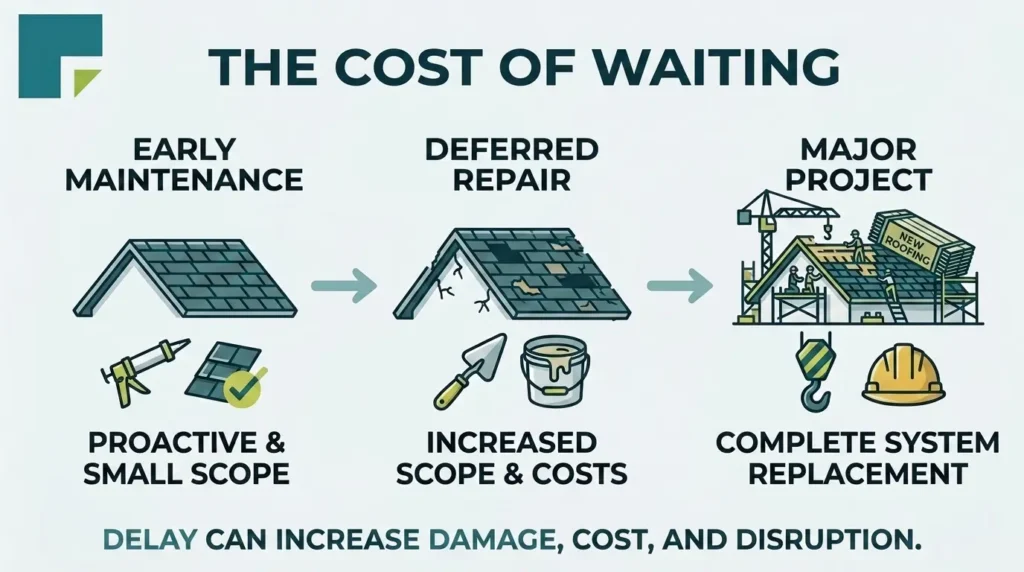
First, construction labor and material costs generally rise over long periods. Inflation alone can raise the cost of a major repair substantially after just one year. Labor shortages, supply chain disruptions, and regulatory changes can further increase pricing. A project estimated at price today may cost significantly more if delayed two or more years.
Second, deterioration does not progress in a straight line. Early-stage issues are often only slight increases to the original cost. A small crack in pavement may require inexpensive sealing if addressed promptly. If left untreated, water intrusion can undermine the base layers, leading to potholes or structural failure that requires full-depth replacement. What began as a minor maintenance item becomes a major capital project.
Roof systems provide a similar illustration. Addressing flashing damage or local membrane wear early may extend the roof’s service life at modest cost. If replacement is postponed too long, however, water intrusion can damage insulation, decking, and interior finishes. The cost multiplies as secondary damage spreads beyond the original project’s scope of work.
Mechanical systems tell the same story. Aging boilers, chillers, or pumps that are maintained beyond their intended lifespan often require more frequent repairs. Expensive emergency service calls accumulate. Replacement parts become harder to obtain the older the system gets. Eventually, failure becomes unavoidable, often during peak demand periods when emergency pricing applies.
Deferred maintenance transforms predictable, budgeted expenses into unpredictable and often inflated expenditures.
What Risks Can Deferred Maintenance Create?
Beyond direct financial impact, deferred maintenance increases operational, safety, and liability risk.
Aging components are more likely to fail unexpectedly. Sudden failures can create safety hazards for residents and guests. Deteriorating balconies, stair systems, or structural elements can raise life-safety concerns. Failing roofs and waterproofing systems can lead to widespread water intrusion, interior damage, and potential mold growth.
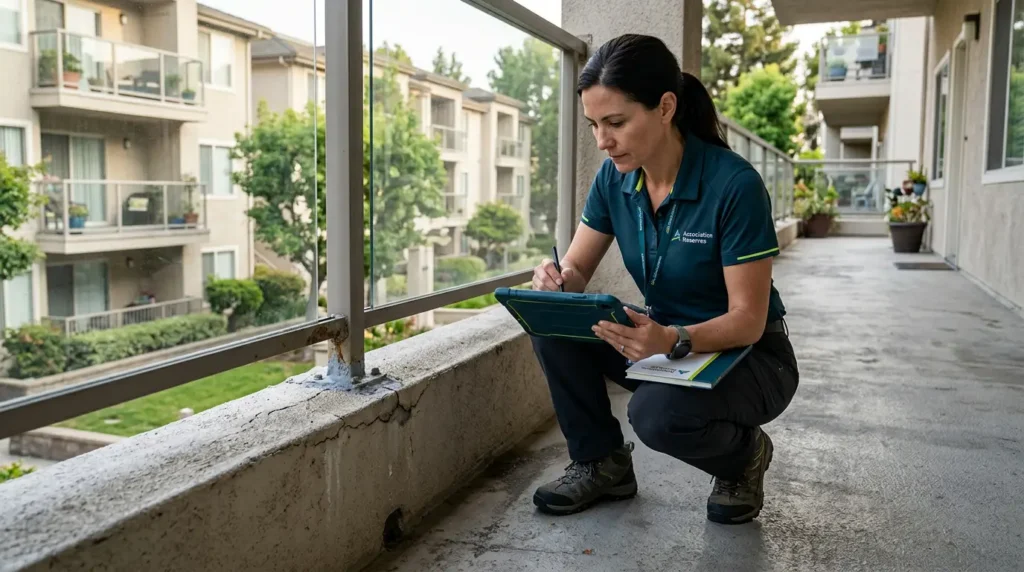
When failures occur without warning, the association is forced into emergency mode. Contractors must be engaged quickly. Competitive bidding opportunities are limited. Work schedules are dictated by urgency rather than strategy. And what was once a simple repair or replacement project is now significantly more expensive. The burden falls on the homeowners either way. Remember… the project never goes away. It just gets bigger the longer it is deferred.
Insurance implications also become more complex. Carriers may scrutinize claims more closely when damage results from long-standing maintenance issues. Premiums may increase. Deductibles may rise. In some cases, coverage disputes may arise if preventable deterioration contributed to the loss. These increases in insurance-related costs can commonly make the initial project cost look inexpensive by comparison.
Operational disruption compounds the financial burden. Residents may experience loss of services, restricted access, noise, or extended construction timelines. Rental communities may face occupancy impacts. Owner frustration often grows when emergencies interrupt daily life.
Deferred maintenance increases not only cost but also uncertainty.
The Compounding Effect
Perhaps the most damaging consequence of deferred maintenance is its compounding nature. When one project is postponed, it often affects other components and future budgets.
Funds originally allocated for planned replacements may be diverted toward emergency repairs. Reserve balances can decline unexpectedly, reducing an association’s Percent Funded and increasing special assessment risk for all the association’s other projects, with a domino effect delaying other future projects.
In some communities, this pattern of deferral becomes normalized. Each board inherits aging infrastructure and limited reserves from its predecessor. The cycle continues as leaders attempt to avoid unpopular assessment increases. Over time, the financial gap between “what needs to be done” and “what cash we have” gets larger and larger.
What might have been corrected with incremental annual assessment increases and regular nominal increases to budgeted Reserve transfers evolves into a situation requiring steep assessment hikes or substantial special assessments. The longer the delay, the fewer “palatable” options remain.
Deferred maintenance rarely exists as a single isolated decision. It often becomes a cascading series of increasingly difficult choices.
The Impact on Community Trust
The cost of deferred maintenance extends beyond dollars and construction timelines. It affects community confidence and trust in leadership.
When visible deterioration persists for years, residents may question why action was not taken earlier. Even when boards acted with good intentions, the perception of inaction can damage credibility. Emergency assessments or urgent projects may feel abrupt and poorly planned, even if they are the inevitable result of long-standing underfunding. Homeowners get used to low budgeted assessments, and they resist the change to actually paying the true cost of ownership, commonly believing the fantasy that “there must be another way”.
Trust is one of an association’s most valuable assets. Rebuilding confidence after a crisis is far more difficult than maintaining it through proactive planning. Remember – there’s no fooling Mother Nature and Father Time. Transparent communication and consistent action reinforce responsible governance. Deferred maintenance, particularly when followed by emergency assessments, can strain relationships for years.
How Does a Reserve Study Help Prevent Deferred Maintenance?
Proactive reserve planning is the most effective defense against the cycle of deferred maintenance.
A professionally prepared Reserve Study identifies major common area components, estimates their Useful Life and Remaining Useful Life, and projects the funding necessary to repair or replace them at the appropriate time. It transforms inevitable deterioration into a structured financial plan.
When boards follow a realistic funding strategy based on professional analysis, they align budgeted Reserve funding with the ongoing cost of deterioration. Funds are collected gradually and predictably from owners over time. This reduces the temptation to postpone projects simply because cash is unavailable.
A well-funded reserve account provides flexibility. Boards can schedule projects strategically, solicit competitive bids, and coordinate work to minimize disruption. Instead of reacting to failure, they operate proactively from a position of preparedness.
Most importantly, this proactive planning allows components to be addressed at the point where repair or replacement is most cost-effective. Early intervention preserves options. Timely replacement avoids secondary damage. Financial discipline protects stability. And it all costs less than deferred maintenance.
How Can HOA Boards Balance Affordability With Responsible Maintenance?
Boards sometimes worry that proactive maintenance and consistent reserve funding will place too heavy a burden on current owners. Affordability is a legitimate concern. Assessments must remain reasonable and manageable is the common cry.
However, spreading costs gradually over time is typically far less disruptive than facing a large special assessment triggered by failure. Again, the homeowners pay the cost either way. Modest, predictable increases are easier for most owners to incorporate into household budgets than sudden demands for substantial lump-sum payments.
Proactive funding supports financial stability for both residents and property values. Communities with disciplined planning tend to experience fewer dramatic fluctuations and special assessments. Buyers and lenders regularly view stable, well-funded associations more favorably than those with histories of emergency special assessments.
Transparent communication is critical in achieving this balance. When owners understand that reserve transfers are designed to prevent larger financial shocks (special assessments) and preserve the condition of shared assets, they are more likely to support gradual adjustments.
Deferred maintenance does not eliminate a project cost. It changes when the association pays and can increase the eventual scope, disruption, and financial burden.
A Long-Term Perspective
Deferred maintenance may appear to offer short-term relief, but it almost always introduces long-term consequences. Increased project costs, heightened risk, emergency disruptions, and strained community trust are common outcomes of deferring projects.
Buildings and infrastructure inevitably age. Deterioration is not optional. The only variable is whether associations address that aging proactively or reactively.
Communities that prioritize long-term planning recognize that reserve funding is not an inconvenience but a necessity. It is a bill that needs to be paid. By funding reserves consistently and addressing projects at the appropriate time, boards reduce owner costs, reduce risk, and maintain financial stability, and maximize property values.
In the end, the true cost of deferred maintenance is not simply measured in dollars. It is measured in lost flexibility, diminished trust, increased uncertainty, and missed opportunities for strategic leadership. In the extreme, it leads a property into the “death spiral”, where the cost of necessary projects become too overwhelming for the ownership base, and the property devalues to the point where the association may no longer be a viable entity.
Associations that stay ahead of major issues through disciplined reserve planning avoid these pitfalls. They transform predictable aging into manageable milestones. They replace emergency decision-making with thoughtful preparation. They minimize the cost of ownership. They enjoy maximized property values. And they create communities that are both financially and physically resilient for the long term.