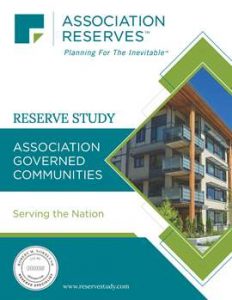

Association Reserves Tri-State Area
Know what your property will need. Build a clear plan to fund it.
Association Reserves helps boards, community managers, and property leaders prepare for major repairs and replacements before they become urgent. Our Reserve Studies identify anticipated projects, evaluate the strength of current reserves, and provide a clear funding plan leaders can understand, explain, and act on.
With nearly 40 years of Reserve Study leadership and more than 30 years serving properties across the region, Association Reserves brings proven methodology, experienced specialists, and guidance that continues after the report is delivered.
Primary Mailing Address
Every property has components that will eventually need to be repaired or replaced. The challenge is knowing what is coming, when the work is likely to be needed, what it may cost, and whether current reserves are keeping pace.
A Reserve Study from Association Reserves gives your board or leadership team a sound, well-supported basis for those decisions. It helps you:
Association Reserves.
Fund honestly. Avoid a crisis.
What Is a Reserve Study?
A clear component inventory identifies the major components the organization is responsible for repairing and replacing and the projects that belong in the long-term plan.
The financial analysis evaluates the strength of current reserves and shows how the property is positioned to meet predictable future expenses.
A customized funding plan gives leaders a clear basis for setting reserve contributions, discussing tradeoffs, and making decisions before predictable projects become urgent funding problems.
The right service depends on what information already exists, how current it is, what has changed at the property, and any requirements that apply.
Best for properties without a reliable existing Reserve Study or component inventory. Our team evaluates the property, develops the component list, estimates repair and replacement timing and costs, reviews current reserve funding, and develops a customized funding plan.
For properties that need an on-site assessment of common area components, including their current condition and remaining useful life, along with updated costs and a revised Reserve funding plan.
For properties that need their Reserve Study updated without a site inspection, using information provided by the association to update project history, Reserve balances, replacement costs, and funding recommendations.
For appropriate properties seeking a client-assisted option, the DIY Reserve Study Kit provides a structured process for developing the physical component information while Association Reserves prepares the financial analysis.
A three-year recurring update option designed to keep reserve information current while creating continuity as leadership, projects, and budgets change.
A Reserve Study is most useful when leaders can understand it, discuss it, and use it. Association Reserves supports clients beyond delivery of the report with planning tools, education, and direct access to experienced specialists.
Property conditions, project timing, construction costs, reserve balances, and leadership all change over time. Regular updates help keep the funding plan useful and create continuity as boards and management contacts change.
Professional Association Reserves clients receive access to uPlanIt, our interactive planning tool. Boards and managers can explore “what-if” scenarios around contribution levels, project timing, replacement costs, and other assumptions to better understand how today’s decisions affect the long-term funding plan.
Reserve funding can affect more than the annual budget. Updated Fannie Mae and Freddie Mac project standards are placing greater attention on reserve allocations and the information lenders use when reviewing condominium projects.
For boards and managers, the practical takeaway is straightforward: current, well-supported reserve information can become important to conversations about funding, maintenance, and project eligibility.
Association Reserves works with organizations responsible for buildings, infrastructure, amenities, and other long-lived assets that require thoughtful repair and replacement planning.

Condominiums, co-ops, HOAs, POAs, PUDs, townhomes, high-rises, active-adult communities, and master-planned communities.

Timeshares, fractionals, travel clubs, vacation clubs, and resort properties.

Country clubs, golf clubs, yacht clubs, recreation centers, and other member-based facilities.

Churches, synagogues, temples, and other faith communities responsible for buildings and shared facilities.

Educational institutions responsible for campuses, buildings, and long-term physical assets.

Camps, retreat centers, and charitable organizations responsible for facilities, grounds, and shared property.

Government facilities, commercial properties, mixed-use developments, and other organizations with long-term capital needs.
Decades of experience have shaped a proven approach to turning complex property obligations into practical funding plans.
Recommendations are grounded in detailed property analysis, transparent assumptions, and an independent third-party perspective.
We make complex property and funding information easier for boards, managers, and stakeholders to understand and discuss.
Education, planning tools, recurring updates, and access to specialists help keep the Reserve Study useful after the report is finished.
Many clients return to Association Reserves year after year as their properties, budgets, and leadership change.
Our Tri-State Area team supports boards, community managers, and property leaders throughout New Jersey, New York, Pennsylvania, and Connecticut.
President
Brian brings decades of community association and real estate experience to the region, helping clients connect the technical findings of a Reserve Study to the practical decisions boards and managers need to make.
Project Manager
Eric manages Reserve Study projects with an emphasis on clear communication, reliable service, and helping clients understand the findings and next steps that follow their Reserve Study.
A Reserve Study is a long-term budget planning analysis for the property components an association or organization is responsible for maintaining, repairing, and replacing. It identifies anticipated projects and costs, evaluates current reserve funding, and recommends a funding plan.
New Jersey requires covered planned real estate development associations to obtain a capital Reserve Study, including a 30-year funding plan. Associations with less than $25,000 in total common-area capital assets are exempt. Covered associations generally must have the study conducted and reviewed at least once every five years. Because the law has been amended and additional legislation remains active, review current guidance and consult association counsel for requirements specific to your community.
New York does not currently have a broad statewide Reserve Study mandate for condominium and cooperative associations. Legislation that would establish requirements remains active. Governing documents, lender considerations, and sound capital planning may still make a current Reserve Study important.
Pennsylvania does not currently establish a broad statewide professional Reserve Study cycle for community associations. A Reserve Study can still provide the property-specific analysis needed to determine appropriate long-term reserve funding.
Connecticut common-interest community budgets must include the amount of reserves and explain the basis on which those reserves are calculated and funded. A professional Reserve Study can provide the long-term physical and financial analysis that supports those decisions.
We recommend an Update – With Site Visit every third year, with an Update – No Site Visit in each year between. Property condition, project timing, construction costs, reserve balances, and contributions change every year, so an annual update keeps the funding plan current for each budget. Your governing documents or state law may also set a schedule.
A Full Reserve Study is generally appropriate when there is no reliable existing component inventory. An Update – With Site Visit refreshes both the physical and financial analysis. An Update – No Site Visit updates the plan when the existing physical information remains sufficiently current.
Pricing depends on the property’s size, complexity, component inventory, location, documentation, and level of service required. Association Reserves prepares proposals around the specific property and scope.
The goal is not simply to deliver a report. Association Reserves helps clients understand the findings and use the plan. Professional clients also receive access to uPlanIt to model funding and project scenarios during budgeting and planning.
Want to learn more before requesting a proposal? Start with these resources:
Which Level of Service Is Right for My Property?

What Happens Next?

Three Key Results of a Reserve Study
Your property will change. Costs will change. Regulations, lending expectations, and leadership may change. A current Reserve Study gives your board or leadership team a clearer basis for deciding what to fund, understanding why it matters, and acting before predictable needs become urgent.
Association Reserves turns complex property obligations into clear funding plans leaders can understand, explain, and act on.
Association Reserves.
Fund honestly. Avoid a crisis.
Brian brings approximately 30 years of combined experience in real estate sales, residential development, and property management. He spent 15 of these leading and guiding community association board members on all aspects of property management, including the strategic and financial planning of large-scale capital reserve projects. Brian holds a bachelor’s degree from Christian Leadership University, is the proud father of 5 children, and husband to his high school sweetheart, Jennifer. In his free time, Brian volunteers his time teaching personal finance classes and serving as a volunteer for the Sea Cadets.
With 22 years of military service, Eric brings a legacy of disciplined leadership and strategic thinking to his role as Project Manager at Association Reserves. His background as a Recruiter, Instructor, Section Chief, and First Sergeant in the Army National Guard shaped a leadership style that is hands-on, mission-driven, and people-focused.
In his current role, Eric manages Reserve Study projects and works to ensure they are delivered with clarity and consistency. He builds lasting relationships with board members, property managers, and colleagues, and his attention to detail ensures reliability in every aspect of his work. Eric holds a Bachelor’s Degree from Fairleigh Dickinson University. Outside his professional life, he enjoys time with his wife and their six children.
 A registered professional engineer, Robert has been involved in the Community Association industry since 1982. Robert founded Association Reserves, Inc. in 1986 and has pioneered many widely used reserve funding concepts. For his expertise, he earned the Community Association Institute’s (CAI) Reserve Specialist (RS) designation and has the distinction of being RS #5. Robert was involved in creating the 1998 National Reserve Study Standards and has greatly influenced the Reserve Study industry. He is a past Chairman of CAI’s Reserve Professionals Committee, past Chairman of the Association of Professional Reserve Analysts, and past President of the Community Association’s Institute (CAI) Greater Los Angeles Chapter. Robert regularly writes on the topic of Reserve Studies and is a frequent speaker in industry-sponsored seminars and presentations throughout the United States. He is often called to serve as an expert witness in litigation involving reserve issues.
CAI Educated Business Partner
Hayden Rourke joined the Association Reserves team as a Site Inspector in 2025. He brings hands-on construction experience and a practical understanding of building systems. Hayden has a solid understanding of the processes and technology necessary to produce an exceptional reserve study. His strengths include problem-solving and being inquisitive, both of which support successful outcomes for clients and the Association Reserves team.
Sam is expected to graduate with a bachelor’s degree in business administration in the fall of 2026. His experience in interior and exterior construction enables him to accurately identify building components, resulting in precise and thorough reserve studies. Sam pursues each project with strong attention to detail, a pursuit for excellence, and commitment to integrity. Outside of his professional pursuits, Sam sharpens his strategic thinking and discipline through martial arts and enjoys spending time with his family.
Jaquilyn is a registered Electrical Engineer with more than 6 years of experience in the Construction and Engineering field, leading multidisciplinary teams and managing electrical engineering projects across industries including power distribution, renewable energy, and industrial automation. Her expertise lies in delivering innovative and cost-effective solutions while ensuring safety, compliance, and long-term operational efficiency. Her attention to detail and understanding of a building’s components are a tremendous asset to the Tri State office.