



As an HOA board member concerned about maintaining property values, you’re likely scouring for ways to ensure proper HOA funding. What gets funded by reserves? Which components should you include in your reserve study? What can’t your reserve fund be used for and why?
What Happens Without a HOA Reserve Study
So what is a reserve study for anyway? Reserve studies are like financial roadmaps for your HOA. They identify upcoming major repairs, cost of replacements, and how much you should be funding annually. Ignoring these inevitable costs leads to: financial strain, an undesirable property, higher insurance rates, decreased property values, and costly special assessments that burden homeowners.
What Gets Funded by Your Reserve Fund?
Your reserve study identifies specific projects in your HOA that are funded by your reserve fund. Think of it as a line item on your reserve study shopping list. But how do you decide which projects belong there? What about insurance? Enter the National Reserve Study Standards 3-Part Test:
- Common Area Responsibility: Is the project something the HOA, not individual homeowners, are responsible for maintaining?
- Predictability: Can you foresee the project based on the asset’s lifespan?
- Significant Cost: Will the project cost a substantial amount compared to your annual operating budget?

Is reserve planning necessary when you have insurance?
The answer is always going to be YES. Your D&O Insurance should not cover just anything and everything, it simply doesn’t work that way.
Remember: Insurance is for accidents and unpredictable expenses. Ongoing deterioration is not an accident.
Now, insurance can actually enforce your HOA to perform some reserve projects. For example, your insurance provider may require safety updates to prevent an accident from happening. And let’s face it, no insurance company wants to insure an unsafe building. The risk of your insurance canceling or increasing your premiums is real – so do the right thing!
Common Components Funded By HOA Reserves:
- Roofing
- Painting
- Asphalt Paving
- Siding
- Windows
- Decks
- HVAC Systems
- Elevators
- Roadways
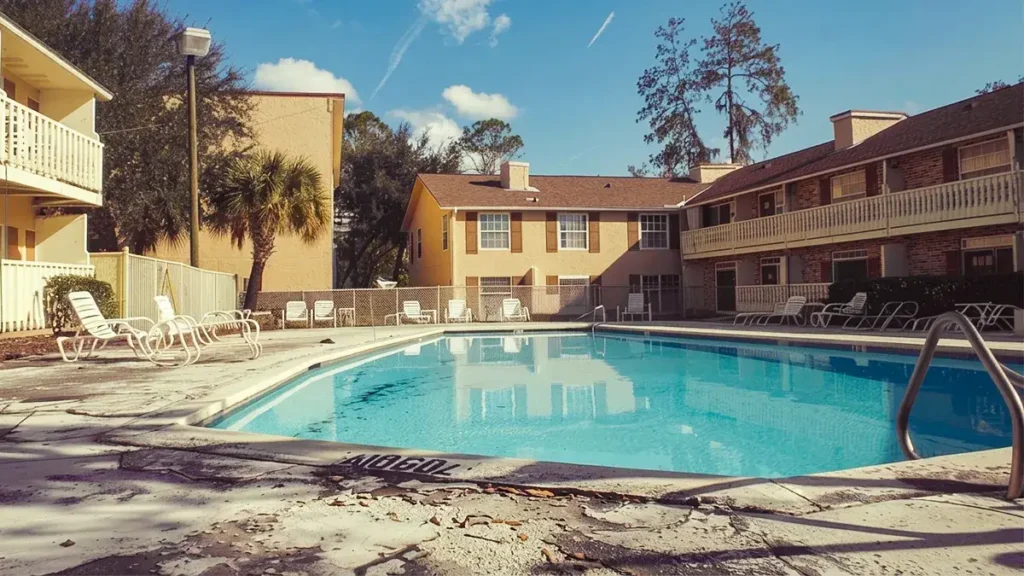
- Maintaining Recreational Facilities (tennis courts, pools)
What Projects Are Not Covered by HOA Reserves?
Uncertainties: Reserve funding isn’t suitable for projects with unpredictable timing or costs, such as insurance deductibles.
Capital Improvements: New amenities that aren’t an existing asset (like a brand new pickleball court) add value, but are not reserve-worthy.
Want to test drive your budget for every component in your reserve study? Click here to check out uPlanIt – The first-ever interactive budgeting tool for HOAs!
Pro Tip: Identify the Biggest Components
Don’t look at the cost of your projects and stress on the ones with the highest price tag. Reframe your mindset to look at them by cost-per-year. This will reveal the hidden heavyweights that are going to significantly impact your annual reserve funding needs.
The Reserve Study Component List
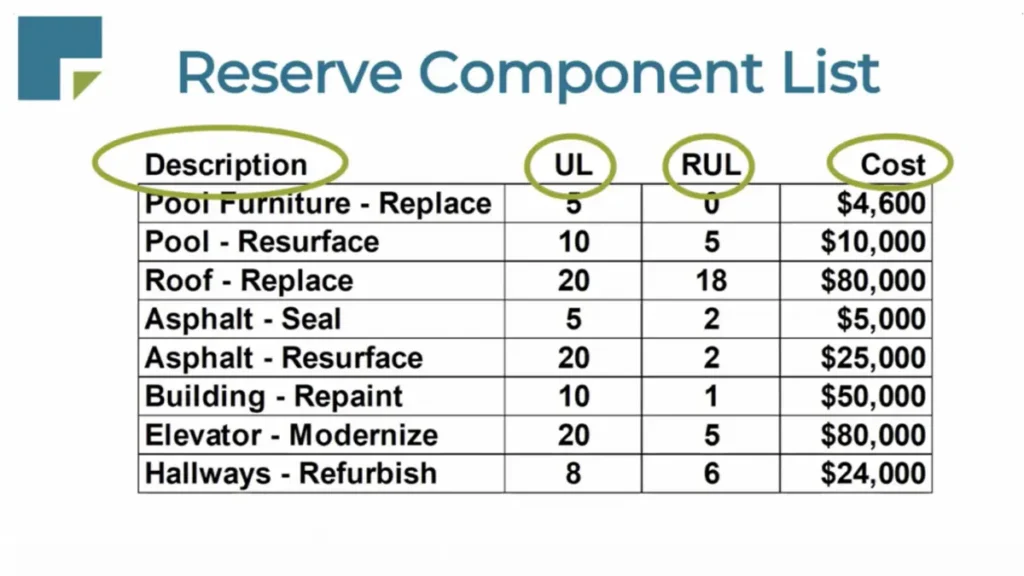
A good reserve component list goes beyond just including or excluding items. Here’s what you should expect to see for each project on your HOA reserve study component list:
Clear Description: What exactly needs repair (ex. asphalt sealing, not just “asphalt”)
Quantity: How much of the component is there
Useful Life: How long is the component expected to last before needing repair or replacement
Remaining Useful Life: How much longer will your current component function
Replacement Cost: The estimated cost to completely replace the component
What Changes Your Reserve Study
Reserve Studies are a living document. As time passes, there are three variables foundational to the Reserve plan that are all subject to change on an annual basis:
- Physical condition of assets
- Cost of repair and replacement
- Current cash balance in Reserves
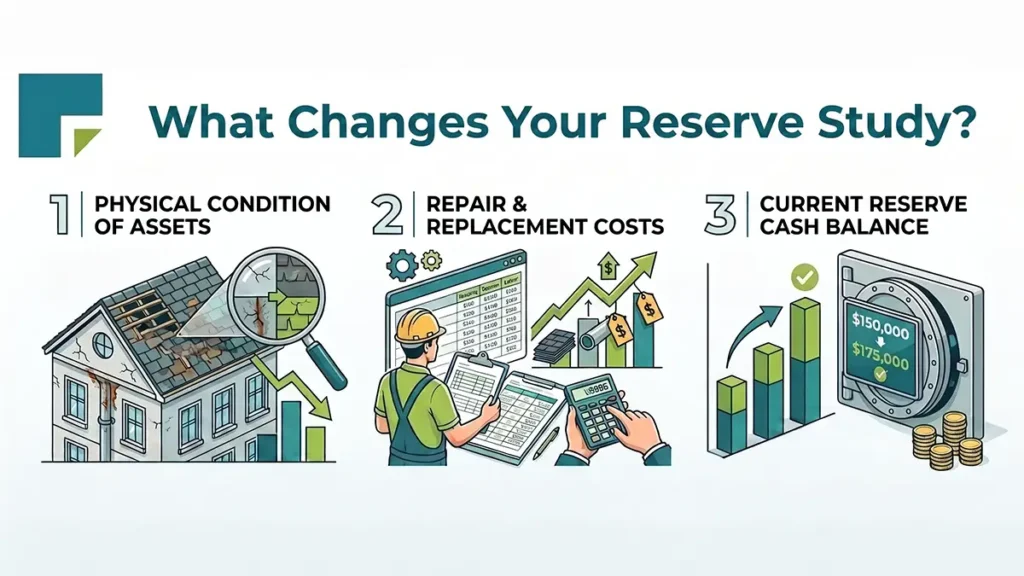
Since all three “C”s change each year, industry best practice, as established by the Community Associations Institute’s National Reserve Study Standards, calls for a With-Site-Visit (WSV) update at least every three years, with No-Site-Visit (NSV) updates in the in-between years.
By understanding reserve components and the National Reserve Study Standards three-part test, you can create a stable reserve funding plan. Avoid unexpected repair costs and hitting homeowners with a huge bill. Attract more buyers, increase your property values, and bring your HOA into the modern age (rather than keeping it a deteriorating time capsule).
Now, what should you do with each component? Click here for our components deep dive to determine whether to replace or maintain your component and save more for your HOA along the way.
For more tips like this, subscribe to our newsletter or to our YouTube channel here! We cover every HOA topic under the sun to keep your board prepared and your community’s future secured.